Showing posts with label Maha. Show all posts

Wednesday, September 30, 2009

Big stores counting the cost of ban on GM food


Supermarkets in talks on how to educate public about benefits of science

By Martin Hickman, Consumer Affairs Correspondent, EuropaBio

Britain's food giants have privately warned that they are struggling to maintain their decade-long ban on genetic modification and called for the public to be educated about the increasing cost of avoiding GM, The Independent reveals today.


As major producers such as the US and Brazil switch to GM, supermarkets are now paying 10 to 20 per cent more for the dwindling supplies of conventional soya and maize, according to a report by the Food Standards Agency (FSA) and the Department for Environment, Food and Rural Affairs (Defra).


Tesco, Sainsbury's, Morrisons, Marks & Spencer, Somerfield, Aldi and Co-op met civil servants to explain their problems in finding non-GM supplies.


Warning of the price hikes, the report – quietly published online last month – said: "Retailers were concerned that they may not be able to maintain their current non-GM sources of supply as producers increasingly adopt GM technology around the world."


Despite legislation requiring GM food to be labelled in the UK's cafes, restaurants and takeaways, customers were already eating food saturated with GM fat without knowing, added the report.


Although fierce public opposition to so-called "Frankenstein foods" has fallen from its peak at the end of the 1990s and early 2000s, when retailers vowed not to stock anything with GM ingredients, changing genes in human food remains highly controversial.


Campaigners such as Friends of the Earth fear GM crops could damage human health and the environment and place control of the food supply in the hands of a few multinational chemical companies, warning of a "corporate takeover of agriculture".


Despite the potential public backlash, ministers believe it may now be the right time to consider its introduction as a way of meeting a UN target to raise global food production by 2050. Asked whether GM was the answer to his call last month for a new green revolution, Hilary Benn, the Environment Secretary, whose new food security strategy this autumn is expected to move closer to backing GM, praised "science".


Supermarkets and manufacturers can sell food made from GM ingredients grown elsewhere, but must state that products contain GM ingredients.


After meeting industry stakeholders, the joint FSA and Defra document – GM Crops and Foods: Follow-up to the Food Matters Report – reported that there "is some use of GM food ingredients in the UK, particularly in the catering sector where oil from GM crops is often supplied to customers who are working to lower prices, and bulk packs are suitably labelled. It was considered unlikely that relevant information regarding food produced using such oils is provided to the final consumer, as required in EC legislation."


The FSA noted that spontaneous concern about GM voiced by consumers had fallen steadily from a peak in December 2003, when 20 per cent of shoppers were worried, to 6 per cent last September.


Supermarket bosses are rethinking their approach. After delivering the City Food Lecture in February, Sir Terry Leahy, chief executive of Tesco, said that giving in to concern about GM could have been a mistake: "It may have been a failure of us all to stand by the science.


"Maybe there is an opportunity to discuss again these issues and a growing appreciation by people that GM could play a vital role in feeding the world's growing population."


At the time, International Supermarket News quoted an industry source as saying: "I am pretty certain that several parties involved are actively looking for the way out of their Canute-like positions. Maybe the reality of the costs of GM-avoidance is finally striking home."


The FSA/Defra document reported that many stakeholders noted "it may be timely to inform consumers of the issues surrounding GM and non-GM supply chains so that they have a clear understanding of current science, the status of non-GM market being reliant on only a few exporting countries, and the steady increase in GM production".


Tesco was unavailable for comment yesterday, but the British Retail Consortium, which speaks for the major grocery retailers, denied British shops would change their approach. "Retailers are not stocking GM products and there are no plans to change that – it's a response to customers' views," said spokesman Richard Dodd.


Pete Riley, director of GM Freeze, the anti-GM campaign, accused the Government of being "desperate" to back GM, adding that it had pressurised Defra and the FSA into producing a "scaremongering" report. Supermarkets could work with growers to produce a long-term, non-GM supply, he said, adding any store that broke ranks by introducing GM would be "brave".


Article courtesy of EuropaBio


Blogger’s note:

Perhaps we should rethink our positions on GM food and labelling as well. Either we quickly learn from the mistakes of the others around the world, or pay heftily after making mistakes ourselves.

Mahaletchumy Arujanan

Wednesday, September 16, 2009

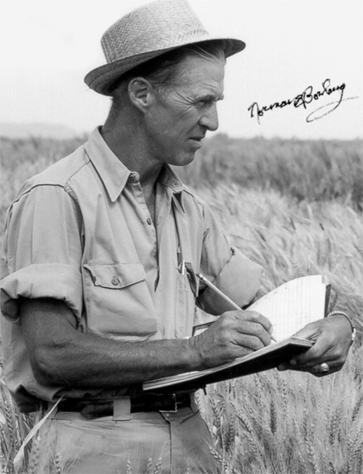
A Tribute to the Man who Fed the World: Dr. Norman Borlaug

Norman Ernest Borlaug
(March 25, 1914 – September 12, 2009)


The Father of Green Revolution has died at his home in Dallas, Texas on 12th Sept, last Saturday at the age of 95. If not for this legend, most of us would not have been here today. His efforts in increasing crop yields have saved hundreds of millions of lives around the world. It has been said the Borlaug saved more lives than any other person in history. For this he received the Nobel Peace Prize in 1970. And he is the only person to have won a Nobel in agriculture so far. Borlaug was also one of five people to have won the Presidential Medal of Freedom, and the Congressional Gold Medal, which is the highest US civilian medal.

In 1944, when many parts of developing countries were facing the threat of mass starvation due to rapid increase in population, Borlaug began his work at a project funded by Rockefeller Foundation in Mexico to increase wheat production. He successfully developed wheat with a sturdy, short stalk that could hold the high-yielding grain on top. He was also able to build in fungal resistance trait in this wheat against wheat stem rust. There wasn’t a short-cut in developing these varieties. Borlaug collected wheat strains from the around the world and started cross-breeding them. He worked with two crops a year, a summer crop in the low-quality, high-altitude soils near Mexico City, and a winter crop hundreds of miles to the north in the low-lying Yaqui Valley. This was done to speed up his research.

In five years, Borlaug was able to develop a variety that was resistant to rust , with higher yield and that was able to grow in both climate when given enough fertiliser and water. But because evolution favoured wheat strains with longer and slender stalks, the stalks tended to collapse when irrigated and this reduced the yield. After thousands of unsuccessful attempts to produce a dwarf variety, Borlaug encountered a Japanese dwarf variety. And finally after another thousands of attempts, in 1954 he successfully developed a short-stalked variety that was rust-resistant and high-yielding.

Due to this variety, Mexico was able to become a wheat exporter in the 1960s. In late 1960s, Borlaug, began his work in India and Pakistan. India was importing 10 million tonnes of wheat at that time. Thanks to Borlaug again, with the introduction of the dwarf variety of wheat, India too emerged as a wheat exporter and became self-sufficient. In Pakistan, wheat production increased from 4.6 million tonnes in 1965 to 8.4 million tonnes in 1970. In 1960, the world production of wheat was 692 million tonnes for a population of 2.2 billion. With the introduction of Borlaug’s techniques and varieties, in 1992, the world wheat production rose to 1.9 million tonnes for a population of 5.6 billion. This was achieved in spite of using only 1% more land.

Borlaug strongly felt that food scientists should be recognised with Nobel Prize, but this suggestion struck down by Nobel Prize which led him to establish the annual World Food Prize. Dr. M.S. Swaminathan was the first recipient of this. Most part of his lives was also spent on the argument over the social and environmental consequences of the Green Revolution.

Borlaug also became was a strong advocate of GM crops and often said that the critics of GM are elitists who are rich enough not to worry about where their next meal was coming from.

I am proud to mention here that Dr. Norman Borlaug was a Patron of ISAAA. His contribution and memories will never fade away and he will be truly missed.

By Mahaletchumy Arujanan

Friday, August 28, 2009

Where will the Dengue Fever Vaccine come from?


Dengue has been killing hundreds of people each year and the numbers is not going down. We have all been advised to spend 10 minutes every week to clean the pots and other mosquito breeding places around our houses. What else can we do? Is this enough to curtail the problem? Is cleaning around the house enough to deprive these creatures from breeding? Months ago we heard about the sterile male mosquitoes developed through GM technology which was supposed to be released to Pulau Ketam for a field trial. But thanks to the opponents of the technology, it did not materialise.

How about developing vaccines? What is the progress in this area? As a tropical country plagued with various tropical diseases, perhaps we should have a Centre for Research on Tropical Diseases. But again, will this answer the question and provide a solution? Who will head the centre? Who will set its direction and ensure it objectives and mandates are met? How will the funding be channelled? Do we have enough researchers to run it?


To save us all these troubles, Acuvax, a South-Australian based vaccine development company has announced that the dengue fever vaccine is set to begin phase I safety trials in the US through its affiliate company, Hawaii Biotech. This is the first recombinant subunit vaccine for dengue to enter clinical studies. The phase I study will lead to the initial clinical testing of Hawaii Biotech’s tetravalent dengue fever vaccine.

Isn’t that good news? Once the vaccine is approved for use, we can all say good-bye to dengue fever. But do not complain when we have to pay these multinationals premium prices for the vaccine. And do not also sing the same old song that multinationals are monopolising the industry. And for those who are against GM technology, please keep away from this vaccine. You might never know the risk... It is just easier and safer to clean around the house... just 10 minutes every week!

So to answer my question on where the dengue vaccine will come from, probably not from a country that is plagued by dengue. The developed countries know which tree to bark. There is huge potential in this vaccine with a huge marketplace.

If we are serious about our commitment to advance biotechnology and look into the priority areas that will benefit the nation and the people, we need to quickly sit down and analyse what is stopping us from moving forward. What are the stumbling blocks? Human capital? Brain drain? Politics? Getting the right people? Fund management? Perseverance?

Millions of dollars have been pumped into this research. Terra Rossa Capital has injected up to US$1.25 million in equity capital in the ACU subsidiary Acuvax Immunology Services. This is just part of the investment. The total investment to develop this vaccine is certainly much bigger. Could we have afforded this? Perhaps, yes. Looking at the amount spent on Antarctic and Space programmes, we can safely say we have the money. It is again barking the right tree!

By Mahaletchumy Arujanan

Friday, June 12, 2009

The Art of Gene Silencing


In this post, I thought of discussing something a little technical but in simple, layman terms. I hope this will be informational and enhance the understanding of biotech for those who are not in this field.

We all know DNA is the hereditary material that makes the protein and gives the individualistic traits to all living organisms. Most traits are wanted and useful, but there are traits that are undesirable and create problems. For example, it would be good to have edible oils with higher ratio of good fatty acids to bad fatty acids. How about eliminating the genes that cause cancer and other deadly diseases? And how about timber trees that don’t flower early, instead grow bigger girth and produce better timber? These are possible if we can knock-out or silence the unwanted genes to prevent them from expressing themselves and producing the unwanted proteins and traits. This is what is known as gene silencing.

Gene silencing is part of genetic modification and is a very useful technique in developing new crop varieties, and has tremendous potential in controlling diseases in humans and animals. Gene silencing simply means switching off or turning down the activity of any undesired gene. Just like DNA, RNA is also made of nucleic acids and is like a courier that delivers the gene’s instruction to make a protein. To silence or turn off a gene’s activity, a mechanism is activated to interfere with the RNA, so the gene’s instruction is never transmitted and the protein is never made. Thus, the gene has been silenced. Because gene silencing involves in the interfering with the RNA activity, it is also known as RNA interference (RNAi).

Scientists are consistently proving that diseases start at gene level and is caused because of malfunctioning of gene expression. With gene silencing, it is possible to shut down a gene and make mutant genes to behave normally. So, turning off the gene that causes cancer is a possibility. Gene silencing too offers tremendous help in drug development. Since this mechanism switches off the activity of only a targeted gene, it is possible to determine the precise function of that gene. This helps in the identification of a target in human cells and is poised to revolutionize drug development.

In the agriculture sector too, gene silencing is an important step in the quest to develop better plants – plants that are able to resist diseases and pests, and plants with improved nutritional qualities.

By Mahaletchumy Arujanan

Wednesday, June 3, 2009

Launch of ISAAA’s Global Status of Commercialized Biotech/GM Crops: 2008 in MARDI


Last week, for the second time MARDI hosted the launch of the ISAAA’s Global Status of Commercialized Biotech/GM Crops. The first one was in 2007. This time round the publication was launched by the Dato’ Mohd Mokhtar Ismail, the Secretary General of the Ministry of Agriculture and Agro-based Industry in the presence of Datuk Dr. Abd. Shukor Abd. Rahman, the DG of MARDI and Dr. Umi Kalsom Abu Bakar, the Director of Biotechnology Research Centre, MARDI. Both MABIC and ISAAA are pleased with the continued support rendered by MARDI towards promoting public awareness on biotechnology.

ISAAA has been tracking the trends of the adoption of GM crops since 1996 and this is one of the most cited literatures in agribiotechnology. The report is entirely funded by two European philanthropic organizations: a philanthropic unit within Ibercaja, one of the largest Spanish banks headquartered in the maize growing region of Spain; and the Bussolera-Branca Foundation from Italy, which supports the open-sharing of knowledge on biotech crops to aid decision-making by global society.

In 2008, ISAAA found that 13.3 million farmers in 25 countries were able to experience the benefits associated with biotech crops. Additionally, total planted area grew 10.7 million hectares. Most notably, in 2008 biotech farming began in the African nations of Egypt and Burkina Faso. Africa is considered the “final frontier” for biotech crops as it has perhaps the greatest need and most to gain. In 2008, Egypt planted 700 hectares of Bt maize and Burkina Faso planted 8,500 hectares of Bt cotton. They join South Africa, which since 1998 has benefited from biotech cotton, maize and soybean.

Political leaders globally are increasingly viewing biotech enhanced crops as a key part of the solution to critical social issues of food security and sustainability. For example, G-8 leaders in 2008 for the first time recognized the significance of biotech crops and called to “accelerate research and development and increase access to new agricultural technologies to boost agriculture production; we will promote science-based risk analysis, including on the contribution of seed varieties developed through biotechnology.”

The European Union also has acknowledged that biotech crops “can play an important role in mitigating the effects of the food crises.” In China, Premier Wen Jiabao has said “to solve the food problem, we have to rely on big science and technology measures, rely on biotechnology, rely on GM.” As a result, China has committed an additional US $3.5 billion over 12 years for continued research and development. Biotech rice alone, already developed and field tested in China, has the potential to increase food availability and net income by about US$100 per hectare for approximately 440 million people in the country.

“Biotech crops make two important contributions to global food security,” Dr. Clive James, the author of the report said. “First, they increase yields, which increase food availability and supply. Second, they reduce production costs, which will also ultimately help reduce food prices. With 9.2 billion people to be fed by 2050, biotechnology plays a crucial role in helping satisfy the growing demand.”

Further, biotechnology is beginning to identify solutions to the growing challenges with drought being seen in sub-Saharan Africa and Latin America. Drought is the single largest constraint to increased productivity. For example, Argentina currently faces a drought so severe that farmers have made a loss on their wheat crop. Drought-tolerant crops, maize in particular, are an emerging reality with seeds expected to be commercialized in the United States by 2012 or sooner and by 2017 for Africa.

In his speech during the launch, Datuk Dr. Shukor highlighted the various GM researches that are ongoing at MARDI and his hope to commercialize them. Whereas, the Secretary General stressed the importance of GM crops and their positive impact on the environment. He further envisaged its potential to the rural communities. He also urged all government agencies involved in agriculture to embrace this technology or face the reality of lagging behind countries like India, China, Philippines, Brazil and Argentina.


By Mahaletchumy Arujanan

Monday, April 27, 2009

Giving True Meaning to “Malaysia Boleh”

I attended an MoU signing ceremony between a private research organization and an European based multinational company recently. It was an honour for me to act as a witness for the signing of this MoU, as well as present a talk at that event.  Since the launch of the National Biotechnology Policy in 2005, we see a mushrooming of ‘biotech’ companies in Malaysia where many label their business as ‘biotech’. This is due to the enormous support provided by the government in terms of funds, financial schemes, tax incentives and special status of deserving biotech companies. Thus, there is a rush to share the ‘biotech’ pie. Sometimes, I feel we need to redefine ‘biotechnology’ to be able include all these companies and cluster them under the biotech industry. We often see wide spectrum of companies ranging from manufacturers of herbal concoctions to the ones producing ‘real biotech’ stuff. However, what I saw during this event gave new hope to the biotech industry in Malaysia. It was a testament that the industry is poised to grow and flourish on Malaysian soil.  
What brought a Belgium based company with a marketing network reaching to 70 nations in the field of animal healthcare, and employing over 700 staff who speak 20 different languages to Malaysia? The pull factor here is a private entity based in Tawau, Sabah which has created its footprint in aquaculture products and research. INVE, the Belgium based company saw great potential in an antiviral drug called RetroMAD1 produced by BioSatria Sdn Bhd for use in aquaculture and livestock industry. BioSatria is a spin-off company of Global Satria Group. The product developed by this company is no ordinary anti-viral. It involves genetic transformation which incorporates 3 different genes into recombinant bacteria to produce an oral-delivery multifunctional fusion protein that hits viral entry, fusion, integration and replication! Of course, the protein refolding is the difficult bit and this will become BioSatria’s drug pipeline platform producing ChAMPs or Chimeric AntiMicrobial Peptides. 

One can only imagine the amount of time, funds, and effort BioSatria spent to be able to develop this anti-viral to its ‘Proof of Concept’ phase…. I understand that more research is being carried out on RetroMAD1 to study its efficacy, safety, and other aspects. A number of trials will be carried out on different animal models to prove viral elimination in mammals as well as poultry. Research is also being carried out to upscale its production in bigger bioreactors. BioSatria’s sister company Defensia S/B will be studying human applications for these new drugs with the University of Malaya. 

RetroMAD1 is a product of a paradigm shift - I would say. It has all the elements that I always preach – research in priority area; private-public collaboration; long-term vision and continuity; market-driven research; and strong fundamental research. RetroMAD1 would not have been a reality if not for all these elements. What is more heartening is that such high-tech product and quality coming from a private laboratory. BioSatria has clearly understood the need of the market and the growing aquaculture industry and its challenges and has stepped into the right direction. Its innovation will not only be available to the Malaysian market but also globally which will be made possible by INVE’s global market reach. BioSatria is now planning to set up a pilot-manufacturing plant in Peninsula Malaysia to produce this oral vaccine. This is certainly a new dawn for the Malaysian biotechnology sector. BioSatria will have its share of contribution towards achieving our national biotechnology agenda in terms of creating more jobs for aspiring biotechnologists and increasing the percentage of GDP from the biotech sector. 

Thumbs up to BioSatria and hope its success, innovation and spirit will be emulated by other biotechnology companies. 


By Mahaletchumy Arujanan

Wednesday, March 25, 2009

Bt Corn in “No-man’s Land”

During my recent visit to Manila, I was on a field tour to a corn farm in Anoa, a village in Mexico City, Pampanga. Pampanga is a province in the central Luzon region of the Philippines. Called the rice granary of the Philippines, the region (Pampanga, Zambales, Nueva Ecija, Bulacan and the nearby provinces some 40 km North of Manila) is known throughout the country for its rice and corn production. Agriculture is the number one source of income for its residents. But the eruption of Mt. Pinatubo in 1991 rendered the fields in Pampanga useless. The lava from the volcano fell over most of the South China Sea and the ashfall was recorded as far away as Vietnam, Cambodia and Malaysia. Global temperature even dropped by 0.9 degrees Fahrenheit because of accumulated ash in the atmosphere. Residents had to irrigate the fields with wastewater for ten years to prepare it for agriculture again. This area became a no-man land as no crops could be planted here for ten years.


It was only ten years later that farmers started planting again and the first crop planted was Bt corn. Farmers experienced good harvests and higher income and now regard the planting of biotech corn (stacked trait corn) as a “hobby” since it requires less work (no insecticide spraying and weeding). An innovative farmer took the risk of using a new technology and he was able to inspire other farmers in the community to try it as well. The community is now benefiting from the technology. The variety used here is MON 818. Though the cost of the Bt seed is double the conventional one, the production cost is reduced. This is because the farmers do not spray pesticides at all. Immediately I thought this must be what the environmentalists will love... Can you imagine how much less time now they are exposed to deadly chemicals? And also how much less chemical residues land on the consumers’ plates? Oh yes, how about all the mycotoxins that are absent because the corns are not injured by borers which leaves no space for fungi infections. And what more, no weeding. All these helped to cut their cost and labour time. The maximum yield with Bt corn is 10 tonnes per hectare vs 3 tonnes per hectare with conventional variety.

The farmers are not going to look back as they are part of the millions of famers globally who are enjoying the benefits of GM technology. The growing number of biotech farmers is a yardstick to gauge the success of GM technology and its benefits to the world. You can cheat a farmer once but never twice!

As part of this tour, I then visited a church nearby where the destruction of the volcanic eruption was felt which left the church half-buried. The community rebuilt the structures to make it usable again. The original second floor of the church is now its ground floor. Some photos are testimony to what I saw.

Thanks to Bt corn which gave a second lease of life to the farming community here!


By Mahaletchumy Arujanan

Friday, February 27, 2009

Public Research vs Private Research

Commercialization is the end product of research. Every research organization and individual scientist wishes to bring their products to the market one day. This would mean that their product has market value; years of their research could be converted to dollars and cents; all their sloughing hours at the laboratory bench would benefit mankind, improve lives and quality of life; they were working on a well-thought project and it wasn’t a waste of time, fund and efforts; it brings fame and credibility to them and their institutes. These are just some simple reasons for commercialization. Of course, the efforts of those involved in basic research are equally appreciated (provided they are of quality). I, for one have always supported basic research because it is the fundamental and prerequisite for commercialisation. I even said in one of my previous article the need for basic research.

In spite of commercialization being a buzzword now, many might wonder how many products have come out from our local universities and research institutes. Certainly our rubber and palm oil industry flourished due to the hard work of the Malaysian Rubber Board and Malaysian Palm Oil Board. What else could we quote?

Some statistics to share with you for the period of 2003-2006:

* The number of patents from public universities in Malaysia: 279
* The number of patents from all research institutes in Malaysia: 171
* The number of patents from National University of Singapore: 121
* The number of patents from Nanyang Technological University: 43


I don’t want to elaborate on these figures. They speak for themselves.

The other issue is that – the number of patents does not say much about chances for commercialization. Though there a number of patents from local scientists, why aren’t they commercialised? With the ranking system, every university wants to hold the highest number of patents. This causes a rush in patenting their work with no consideration on the applicability of the patent.

I have few answers for this:

1. At private sector, they work backwards. In other words, they start a project with the end in mind. All projects are commenced based on the need of the market. They study the market first before investing the money and time. Whereas, at the public sector, the scientists or institutes try to create a market for the product that they are or have developed.


2. At the private sector, the best brain leads the research and team members are assigned based on their expertise. No politics rears its head. Profit is the main factor. Anyone who can’t agree with the team, its objectives, or unable to perform are led to the door. At the public sector, collaboration is not a favourite word. It is difficult to form team comprising of scientists from different institutes. Everyone has their own agenda and interest. Funding committees are not nonpartisan.


3. Continuity and perseverance is the rule of the day at private sector. Board of directors, share holders, top management can change but not the project, unless it is deemed to fail. This is a rare case at the public sector. Projects, policies, direction changes every time a new minister, director and top management takes office.


4. At the end of the day, private sectors have no choice but to produce results and are held accountable for the funds allocated. Failure is certainly not an option. At the public sector, we hear about launches but hardly hear about the outcome of it.


To succeed public sectors must be run like corporate. Quality, productivity, effectiveness, and end results must be the rule of the day. As I always say, the only option we have is to succeed. Failure is never an option!

By Mahaletchumy Arujanan

Tuesday, February 17, 2009

GM Brinjal anyone?

Brinjal is one of the most important vegetables in Asia. Statistics in India shows that brinjal is the second highest consumed vegetable and a total of 1.4 million small, marginal and resource-poor farmers grow brinjal on 550,000 hectares annually. Brinjal provides a steady income to Indian farmers throughout the year and India produces one quarter of the global production which translates to 8 – 9 million tonnes.

One major challenge for Indian and other brinjal farmers is the attack by insects and the most potent one is the fruit and shoot borer (FSB). FSB causes losses of up to 60 -70% in commercial plantings. Damage starts in the nursery, prior to transplating, and continues to the time of harvesting. This is then carried over to the next planting season. FSB damages brinjal in two ways – first, it infests young shoots which limits the ability of plants to produce healthy fruit bearing shoots, thereby reducing potential yield; second, it bores into fruits making them unmarketable. Due to the fact that FSB larvae remain concealed within shoots and fruits, insecticide applications are ineffective, despite 15-40 sprays, or more in one season. Farmers usually spray till the fruits are harvested, leaving no time for the fruits to be free of chemicals.

The good news – Mahyco, a local company, partly owned by Monsanto has successfully developed Bt Brinjal after eight years of research. The crop has undergone rigorous science-based regulatory approval processes in India and is currently at an advanced stage of consideration of deregulation by the Indian regulatory authorities. When approved, Bt brinjal will be the first GM food crop to be approved for human consumption in India. Bt brinjal has the gene from Bacillus thuringiensis, a common soil bacterium that is widely used to develop GM crops. This technology was donated by its private sector developer, Mahyco, to public sector institutes in India, Bangladesh and the Philippines to benefit small resource-poor farmers. It is an excellent example of technology transfer from the private to the public sector.

I would like to share some scientific facts on Bt brinjal here. Studies on food and feed safety, including toxicity and allergenicity tests that were conducted on rats, rabbits, fish, chickens, goats and cows have confirmed that Bt brinjal is as safe as its non-Bt counterparts. Environmental impact assessments to study germination, pollen flow, invasiveness, aggressiveness and weediness too proved to be similar to non-Bt brinjal. Number of larvae on Bt brinjal were significantly reduced from 3.5-80 to 0-20 larvea. Furthermore, multi-location research trials confirmed that insecticide use were reduced by 80%.

With this success, one question is starting to linger on my mind. Will this make the opponents of GM more receptive towards this technology? Bt brinjal will certainly reduce the number of insecticide sprays, thus, reducing the amount of chemical residues from reaching our dinner plates. It will also lower the environmental footprint caused by the agriculture sector. It will reduce the exposure of farmers and their families to chemicals. It has proven that collaboration between private and public sectors is possible. It has proven that GM technology actually benefits resource poor farmers in developing countries.

It will be interesting (frustrating as well...) to watch the opponents of GM technology taking to the streets in space suits trying to deprive poor farmers of this technology for various unscientific reasons.

For those who want to read further, please visit, www.isaaa.org/kc.

By Mahaletchumy Arujanan

Wednesday, December 31, 2008

Science Journalism in Malaysia

It is undeniable that science and technology play a vital role in nation building, elevating the status of a country from developing to developed nation, improving the quality of life and environment, alleviating poverty, and increasing self-sufficiency of a nation among others. These are just some simple examples of the impact of science and technology. None of us can deny that science and technology infringes on all aspects of our lives. Malaysia has big dreams: achieving developed status, producing a Nobel Laureate, and emerging as a biotech hub. Much effort has been focussed towards realising these dreams and aspirations. However, besides focusing on the main areas such as funds, R&D, infrastructure, and investment, other instrumental peripheral areas need intense attention as well.


One of it is – science journalism. This is a branch of journalism that specialises in communicating science news to the public. This is an important area that needs to be nurtured to increase science literacy among our populace. It is pertinent that science news reaches the masses so that the society is well informed of current innovation and the need for it. It helps them to understand the technology and get them involved in decision making based on facts. Science literacy among school children too is crucial as this will inculcate interest in them to pursue careers in science. We are all well aware of the fact that Malaysia is still lacking of skilled workers and researchers.


Very few journalists have mastered this art and there are many reasons for it. Editors have a big role in increasing the frequency of science news in mass media. Most newspapers and electronic media do not have a science desk. Science news is covered by journalists who are not trained in science and is assigned based on need. This translates into distortion of science news. Scientists are reluctant to talk to the media fearing what they say may be misquoted which will tarnish their image among their peers. However, there are a few very good science writers, though this number is really very small and is largely outnumbered by their colleagues and editors who do not do justice to science news and coverage.

It would be good for all science courses to offer a module on science journalism to equip science graduates with science communicating skills. All science graduates will be involved in communicating science in one way or another in their working life and a module on science journalism will enable them to so efficiently.


There are very few quality science programmes on television produced locally. This should be looked into. I strongly believe that the Ministry of Information should take a lead role in communicating science to the public to complement the efforts of Ministry of Science, Technology and Innovation.

I remember attending the launch of Pakistan Biotechnology Information Centre (PABIC) that was officiated by the Minister of Information in Islamabad. It was indeed really heartening to hear the minister announce that he will instruct the national television station to air snippets of biotech information during prime time. I wish Malaysia could follow suit. Imagine the number of people we could reach out if scientific information is aired during prime viewing time. This will enrich and transform our society into a science literate society.


According to UNICEF, the literacy rate of Malaysia among youth (15-24 years old) is 97%. This is a remarkable achievement since independence. Let us now concentrate on science literacy as well.

By Mahaletchumy Arujanan

Tuesday, December 16, 2008

My New Year Wish List

I don’t believe in making new year resolutions, as I always feel you don’t have to wait till the end of the year to make a resolution or make resolutions only once a year. I make resolutions whenever there is a need. So, throughout the year, I make several resolutions. It is like running a company, whenever there is an urgent need, you call for an Extraordinary General Meeting and make resolutions...

However, I do have a wish list for the coming year. Here it is:

1. More concerted efforts among various ministries to promote biotechnology and see that we achieve what is outlined in our National Biotechnology Policy. This includes Ministry of Science, Technology and Innovation; Ministry of Agriculture and Agrobased Industry; Ministry of Plantation Industries and Commodities; Ministry of Health; Ministry of Education; Ministry of Higher Education; Ministry of International Trade and Industry, Ministry of Natural Resources and Environment, Ministry of Entrepreneur and Co-operative Development; Ministry of Energy, Water and Communication; Ministry of Information, etc.

2. Establishment of a balanced, science-based and industry-friendly Act and regulations on various aspects of biotechnology – IP, new plant variety, GLP, GCP, biosafety, etc.

3. More communication between scientists and the public on the development of science and technology.

4. More science news on newspapers and national TV channels.

5. Funds and grants for research, development and commercialization to be channelled in a more productive and efficient manner.

6. More funds for R&D – but for truly deserving projects with the interest of the nation

7. More collaboration between research institutes, universities and the industry and reduction of duplications in research.

8. Serious efforts in reducing brain drain – providing scholarships to deserving students, creating conducive working environment for scientists, providing excellent career advancement for deserving scientists.

9. Serious efforts in developing human capital in various biotechnology fields, upgrading the quality of local universities in terms of teaching and research.

Lastly,

10. Shedding off counter-productive sentiments – anti-globalization, anti-MNCs, and beliefs based on emotions and not science and facts.

HAPPY NEW YEAR TO EVERYONE!

By Mahaletchumy Arujanan

Wednesday, December 10, 2008

Biotech Revolution in Agriculture: Where is Malaysia?

Agriculture is a dynamic, ever evolving field. The Green Revolution that took place between the 1940s and 1960s transformed the agriculture landscape and successfully led to significant increase in food production. During this period, technologies introduced included agrochemicals, irrigation projects, synthetic nitrogen fertilizers, mechanization, and plant breeding. This revolution prevented starvation, increased farmers’ income, and produced high yielding crops, in spite of constant pessimism and scaremongering by critics. Nobel Peace Laureate Prof. Norman Borlaug, the man behind the Green Revolution and his team had to face confrontation with bureaucrats, resistance from local seed breeders, and centuries of farmers’ customs, habits, and superstitious. Nevertheless, from 1950 to 1992, the world’s grain output rose from 692 million tons produced on 1.70 billion acres of cropland to 1.9 billion tons on 1.73 billion acres of cropland. This was an increase in the yield of more than 150 percent. Without high-yield agriculture, either millions would have starved or increases in food output would have been realized only through drastic expansion of acres under cultivation. This would have resulted in loss of pristine wilderness, a hundred times greater than all the losses to urban and suburban expansion.

The big challenge in the next 50 years is to double crop production on the same area of land in the face of climate change and decreased water supplies and feeding the anticipated global population of more than eight billion people. The current revolution in agriculture revolves around biotechnology which will be able to meet the challenge. Genetic Modification (GM) technology offers a solution to complement conventional techniques. This new biotechnology can help us to do things that we could not do before, and do it in a more precise, predictable, and efficient way. However, the crucial question is whether farmers will be permitted to use the technology with many naysayers and scare-mongers creating fear about this technology.

Malaysia is in the right track with agriculture identified as the third engine of growth. With a high import bill and acknowledging the fact the agriculture not only provides food, but also feed, fiber and fuel, this sector certainly need to be revisited and revitalized. However, it is important of us to stay focused and be farsighted. Many fail to realize that GM crops have stood the test of time. Last year, 247 million acres of GM crop were successfully farmed by 10 million farmers in 22 countries. Increase in yield, reduced use of pesticides and reduced agriculture footprints were some of the benefits experienced and documented. Malaysia need to be pragmatic in facing our challenges – the huge food import bill, the aging agrarian community, the complete dependency of our livestock industry on imported feed, and the unexploited markets and potential of our fruits, flowers, ornamentals and timber among others.


Any new technology need to be assessed but it should be done based on good science and not swayed by anti-business, anti-technology and anti-globalization sentiments. Skeptics and critics of the GM technology constantly spread junk-science to scare the public but none of their claims of catastrophe have come about. The World Health Organization, the Food and Agriculture Organization, and Academies of Sciences around the world have reported no evidence of health or environment harm from GM crops.

Malaysia has all the ingredients to succeed in the biotechnology sector and we should learn from the other countries that have created a mark in this field to prevent unwarranted delay. A sensible approach will take us a long way instead of reinventing the wheel. The question should be: Where is Malaysia and where do we want to be?
by Mahaletchumy Arujanan

Friday, December 5, 2008

Conventional Breeding vs Genetic Modification (Part 2)

I got an interesting comment on my article posted sometime ago: http://malaysia4biotech.blogspot.com/2008/07/conventional-breeding-vs-genetic.html.

I started responding to the comment and it got too long, that I decided to post it as an article. Here is my response:

We have to first understand that there is nothing such as absolute safety. But what we can safely say is that in spite of many anti GMO claims, GM crops present not new or different risks. National Academies, Royal Societies and Scientific Societies around the globe have reviewed the underlying science and all have come to the same conclusion. The technology is more precise and better defined than conventional plant breeding and it produces fewer and smaller genetic changes. When regulators in the EU or Australia or Japan approve a new GM crop, they do it with the certainty that it is as safe as any other crop. Determined anti GM activists have spread all sorts of fears about the technology but the scientific community believes that when newly developed GM products are approved by regulators the world over, they are the best studied and safest crops we have ever planted.

There is an extensive scientific literature on safety studies and thousands of papers about safety of specific crops. None of these reveal any flaws in the case-by-case assessment process. Those kinds of studies have been independently done and published. When anti GM activists have no answer for the facts the only thing they can do is try to impeach the source in the hope that listeners will believe them without consulting the literature.

There is more research on GM crops being done in the public sector and in developing countries than there is in the private sector. Big companies have given their technology free of charge to projects designed to help the poor and hungry. People who run misinformation campaigns know that it is always a good idea to give the audience a villain to hate. Many of the arguments against biotech companies are simply anti-globalization and anti-capitalist arguments. It would be better if this debate were held on the merits of globalization and capitalism rather than through a back door attack on a surrogate produced by companies—in this case, GM crops. Personally, I find things produced by giant companies very useful. They produced my computer, my car, the food I eat, the clothes I wear, the communication systems I use, and the energy that cools and powers my house. To those all anti-industry individuals out there, I say – please stop using any products produced by the industry...

I agree completely that it depends on who one listens to and who one believes. One should be very careful in choosing who to believe. In this debate there are giant companies trying to sell products but there are also anti-GM activists whose livelihood comes from continual campaigns against this and other technologies. I have chosen to believe the consensus of the scientific literature. In this case there are numerous peer-reviewed papers that document large reductions in chemical use associated with a switch to GM crops (see Brooks and Barfoot, Pray et al. etc). Given the staggering amount of evidence on this topic it is amazing that those who oppose the technology still go on spreading junk science, oblivious to all the scientific evidence.


That is also another fallacy generated by opponents of GM crops. Saying something again and again doesn’t make it true. FAO says there is not only not enough food in the world to feed the world population and that the situation is getting worse by the day. Food reserves have fallen to all time low and food prices are near all time high. In spite of the Millennium Goals, the number of hungry is going up not down.

Risk analysis is a comparative process in which we analyze one product or process against another. When we compare GM crops with conventional crops we conclude they are actually safer. That’s a scientific risk assessment. It does not mean that conventionally bred crops are unsafe—not at all, we eat them every day and know that they are safe. It does mean that GM crops are no more risky and are usually less risky than conventional foods. There are no villains, monsters or heroes here. Just foods that is as safe as others. The point being made is simply that there is more uncertainty with conventional crops than GM crops, more changes in the DNA could have taken place, composition could have changed more dramatically, and there is a greater risk of producing toxicants or allergens by conventional breeding than there is with GM crops. But none of this means conventional crops are any less safe than we know them to be—it is merely a good way of putting GM crops in the proper perspective to compare their safety with that of conventional crops.

By Mahaletchumy Arujanan

Tuesday, December 2, 2008

Opportunities in Biobusiness: Creating Wealth with Biology

Anyone who is looking to invest should seriously consider Asia. This is the fastest growing region that offers great opportunities. With its population rapidly moving up the socioeconomic hierarchy, there are unlimited opportunities for investors and entrepreneurs to create value and wealth. One area that generates lots of excitement is “biology” or “biotechnology” to be more specific.

Biotechnology is an age-old technology that has evolved tremendously to meet the modern requirements of humankind and at same time contributes towards the well-being of the environment. Many successful bioentrepreneurs have proven that the popular notion that scientists can’t make money is merely a myth. What is required is probably a good sense of business orientation, some knowledge in finance, marketing, and other entrepreneur skills. Not to forget perseverance and the right mindset.

Recently I read a book authored by Prof. Paul Teng of Nanyang Technological University Singapore – “Bioscience Entrepreneurship in Asia: Creating Value with Biology”. One will be surprised by the various means offered by biology for the creation of value and wealth. This area is not just limited to highly skilled personnel, scientists or huge multinationals but the doors are open to people from all walks of life and for small entreprises too. One simple example is the production of planting materials using tissue culture techniques. Once the skills and the inner works of tissue culture are mastered, anyone can start a ‘production line’ to produce quality planting materials. There is huge potential and market in this area – from producing for plantation to nurseries and household. The plants too can vary from fruits trees to ornamental, commodities, herbs, and timber.

Biopesticides and biofertilizers, anyone? There are numerous options in these areas as well. Not to mention production of food, organic acids, enzymes, vitamins, and amino acids through biofermentation.

Have you ever imagined a mushroom business? This can lead to the production of food and nutraceuticals.

What I have mentioned here are just a few examples. There are unlimited options. A good approach might be some joint ventures with research institutes and scientists who could offer their expertise for beginners. A number of research institutes in Malaysia such as MARDI and FRIM offer licenses to those interested in using their technology for commercialization. With the incentives and support provided by the government through the Malaysian Biotechnology Corporation, the dream of owning a bioenterprise is within reach.

Furthermore, through this industry, bioentrepreneurs are able to contribute to the wellbeing of the nation and community as products, technology and services developed using biotechnology could help to enhance the quality of life, food security, and reduce negative impact to the environment.

The good news is, in Asia the industry has not reached its saturation point and there are unexploited market, products, technology and services. One just has to be innovative and bark the right tree.

For those who are interested to read the book, look for Bioscience Entrepreneurship in Asia: Creating Value in Biology, Paul S. Teng, 2008. World Scientific.

by Mahaletchumy Arujanan

Monday, November 17, 2008

EU’s GM aversion costs €2.5 billion a year

The European livestock sector is losing €2.5bn a year thanks to EU time-wasting on authorising GM feeds and a zero-tolerance policy on new GM varieties, according to a report by agricultural trade researchers.

While feed prices have been hit by poor harvests and world-wide shortages, EU import bans on GM maize have pushed up prices further, the report by organisations including the Agricultural Industries Confederation says.

An estimated 15% of losses in the sector are caused by EU delays, it adds.

The researchers, who have sent their report to European Commission president Jose Manuel Barrosso, said policy needed to change before the livestock industry was "destroyed" due to lack of feeds.

AIC said the situation would get worse unless EU policy towards GMs was altered.

With new GM varieties due to be commercialised in 2009, increased use of GM crops in North America and Brazil and GM residues contaminating non-GM crops, finding importers who could provide non-GM soya feeds would become increasingly difficult, AIC said.

The EU is 78% dependent on imported animal proteins like soya and there are few domestic alternatives, it added.

by Lucy Busuttil for Farmers Weekly Interactive

Comments from malaysia4biotech:
It is amusing that EU bans GM feed but imports livestock products of animals fed with GM feed. It is clear that the denial of GM products in the EU is nothing more than a trade barrier. This double standard completely lacks science-based decisions. EU is already facing pressure from their farming communities to allow GM feed to enter the country. With the current global shortage of grains, the government will have a big problem persuading consumers that GMOs are safe, when they have denied this in the past.
Many developing countries are influenced by the positions taken by EU, which is heavily influenced by Green NGOs.

Norman Borloug, Father of Green Revolution says this:
"Some of the environmental lobbyists of the Western nations are the salt of the earth, but many of them are elitists. They've never experienced the physical sensation of hunger. They do their lobbying from comfortable office suites in Washington or Brussels. If they lived just one month amid the misery of the developing world, as I have for fifty years, they'd be crying out for tractors and fertilizer and irrigation canals and be outraged that fashionable elitists back home were trying to deny them these things."

When NGOs say we need to farm sustainably, they mean the farmers... not them. These NGOs should try to get themselves dirty in the soilbeds, sweating and back-breaking, with a fork and spade. Imagine being a woman trying to feed five kids, lost her husband to HIV, working from dawn to sunset on arid land, without irrigation, fresh water, fertilisers and quality seeds. Who deprives them of technology and quality life?
By Mahaletchumy Arujanan

Saturday, July 5, 2008

About the Bloggers

Mahaletchumy Arujanan

Mahaletchumy Arujanan is the Executive Director of Malaysian Biotechnology Information Centre (MABIC) who is a trained scientist with a Bachelors degree in microbiology and biochemistry and Masters in biotechnology. She realized she is not cut out to be a scientist as she likes to meet and talk to people instead of sitting at the laboratory bench. She likes to think of herself as a science communicator. In other words, she has a soul of a communicator trapped in the body of a scientist – hybrid produced through conventional breeding! In her free time, she practices her communication skills with her two young daughters, ‘corrupting’ their minds with biotechnology.

Maha, as she likes to be addressed is a strong biotechnology advocate and inaccurate information on this technology often gets her worked up and raises her blood pressure. Her favourite aspect of biotechnology is Genetic Modification (GM) and strongly believes it will be the mainstream in food and agriculture in the next 10 years or less. She stays healthy and young by taking lots of GM soybean and is ‘allergic’ to organically grown food as her scientist mind tells her it is not tested enough for safety. To meet her, just attend any biotech events, you might bump into her.